1080p gaming is still alive, and honestly, for most people, it’s the smartest way to play PC games.
Even though YouTube and marketing constantly push 1440p and 4K gaming, the reality is very different. A huge number of gamers still use Full HD monitors, older gaming PCs, budget systems, or laptops connected to external displays.
And after testing many different GPUs over the years — from older GTX and RTX cards to newer AMD GPUs — I realized something important:
You do not need an expensive graphics card to enjoy modern games.
In fact, some older used GPUs still offer incredible value in 2026.
At the same time, newer graphics cards bring advantages like:
- DLSS Frame Generation;
- AV1 encoding;
- improved ray tracing;
- better efficiency;
- and lower temperatures.
So choosing the best budget GPU today is no longer just about raw FPS.
You also need to think about:
- VRAM;
- driver support;
- power consumption;
- used market pricing;
- game optimization;
- and how long the GPU will realistically stay relevant.
The good news is that there are still many excellent options for 1080p gaming, including both brand-new GPUs and older used cards that continue to perform surprisingly well.
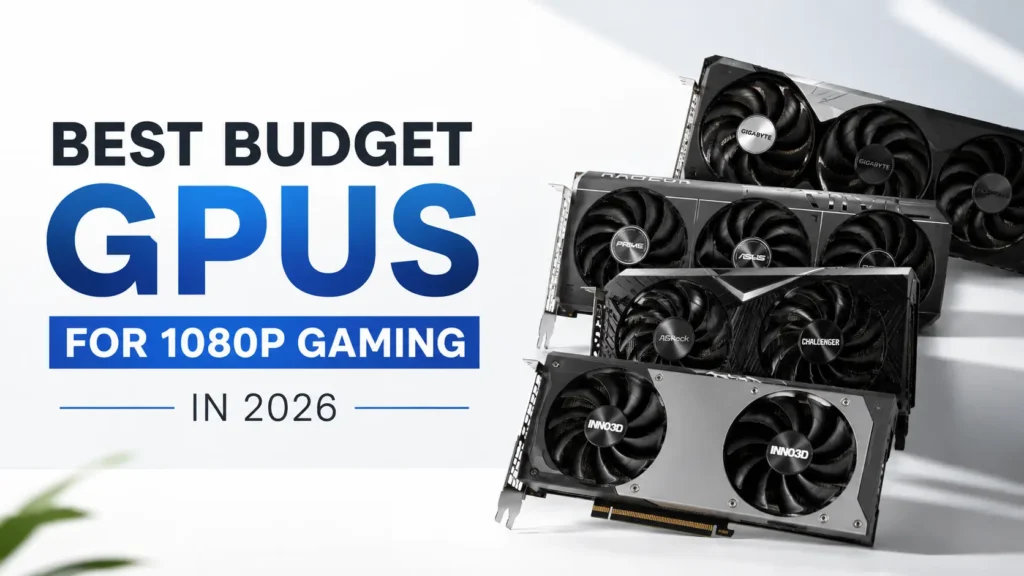
In this guide, we will look at the best budget GPUs for 1080p gaming in 2026, including NVIDIA, AMD, Intel Arc, and older used GPUs that are still worth considering.
What Actually Matters for 1080p Gaming in 2026?
A few years ago, almost any mid-range GPU could handle 1080p gaming without major problems.
But modern games changed significantly.
Today, many AAA titles use:
- heavier shaders;
- larger textures;
- more advanced lighting systems;
- and dramatically higher VRAM usage.
And honestly, optimization on PC is becoming more inconsistent too.
Some games are extremely well optimized.
Others can easily consume massive amounts of VRAM even at 1080p.
Because of that, modern budget GPUs need to balance several things at once.
VRAM Is Becoming a Bigger Problem
One of the biggest GPU discussions right now is VRAM.
And honestly, after testing modern AAA games, I understand why people are concerned.
Games like:
- The Last of Us Part I;
- Hogwarts Legacy;
- Alan Wake 2;
- and some newer Unreal Engine 5 titles
can already use more than 8GB of VRAM depending on settings.
This does not automatically make 8GB GPUs bad.
But it does mean that:
- ultra textures are becoming harder to use;
- optimized settings matter more;
- and some GPUs may age faster than expected.
This is exactly why older cards like:
- RTX 3060 12GB;
- RX 6700 XT;
- and other 12GB GPUs
continue to age surprisingly well.
Why Many Gamers Are Angry About 8GB GPUs
Honestly, this became one of the biggest controversies in modern PC gaming.
Many gamers feel frustrated because some newer GPUs still launch with only 8GB of VRAM, even though modern games continue becoming more demanding.
The problem is not that 8GB is unusable.
The real issue is long-term value.
When someone buys a GPU in 2026, they usually expect it to remain comfortable for several years.
And many people now worry that 8GB cards may require:
- lower textures;
- more aggressive upscaling;
- or compromises sooner than expected.
This is one reason why older GPUs with 12GB VRAM are still extremely popular on the used market.
DLSS and FSR Matter More Than Ever
Modern upscaling technologies completely changed budget gaming.
NVIDIA DLSS and AMD FSR can dramatically improve performance while maintaining surprisingly good image quality.
And honestly, for budget GPUs, these technologies can significantly extend lifespan.
Sometimes the difference between:
- 45 FPS
and - 70 FPS
comes almost entirely from upscaling.
Frame Generation Is Helpful — But Not Perfect
Frame Generation is also becoming increasingly important.
However, I think it is important to be realistic here.
Some marketing makes Frame Generation sound like magic, but the reality is more complicated.
Yes, it can dramatically improve perceived smoothness in supported games.
But:
- input latency still matters;
- image quality can vary;
- and lower base FPS can still feel less responsive.
In my experience, Frame Generation works best when the game already has a decent baseline frame rate.
Still, for many budget GPUs, it can absolutely help extend usability in demanding modern games.
RTX 5060 — A Strong New Mainstream Option
NVIDIA GeForce RTX 5060 is quickly becoming one of the most discussed mainstream GPUs in 2026.
And honestly, it makes sense.
Compared to older RTX 30-series cards, the RTX 5060 brings:
- better efficiency;
- improved DLSS support;
- stronger ray tracing;
- AV1 encoding;
- and modern architecture improvements.
For pure 1080p gaming, it performs very well.
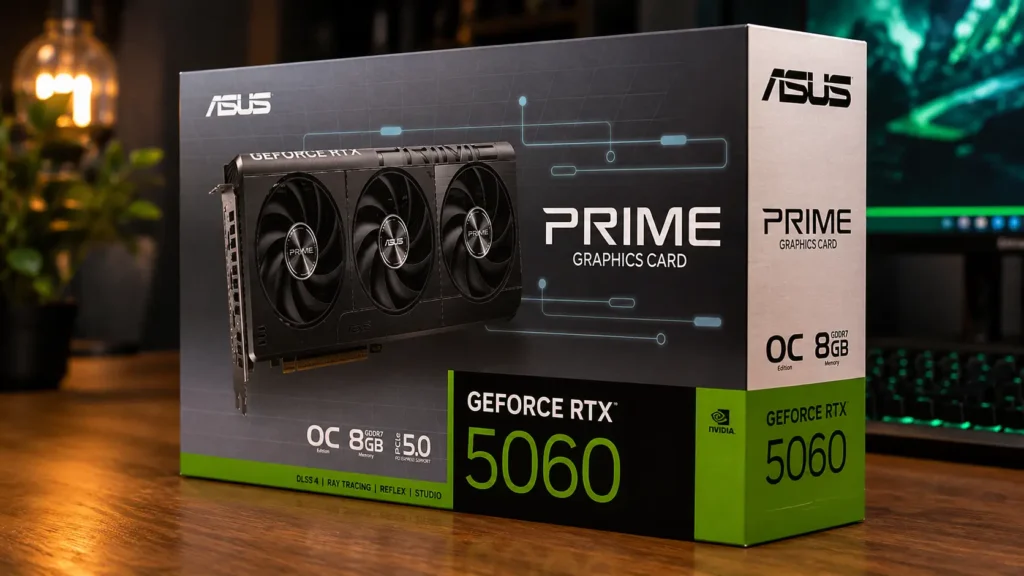
Most modern games can comfortably run at:
- high settings;
- high refresh rates;
- and stable frame rates.
Why Many People Still Criticize It
At the same time, the RTX 5060 is not free from criticism.
A lot of gamers are disappointed that modern GPUs in this price range still rely heavily on 8GB VRAM configurations.
And honestly, I understand both sides.
On one hand:
- NVIDIA’s software ecosystem remains excellent;
- DLSS is still extremely useful;
- and efficiency is impressive.
But on the other hand:
- modern games continue becoming heavier;
- VRAM requirements keep increasing;
- and some people expected more long-term headroom.
Because of that, many gamers are now paying much closer attention to VRAM capacity than they did a few years ago.
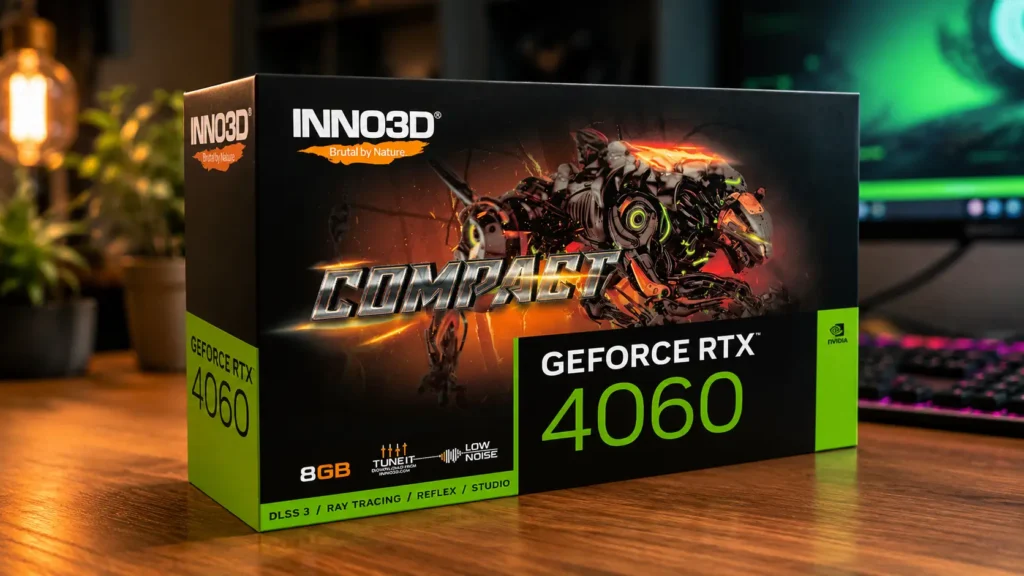
RTX 4060 — Still Better Than Many People Think
NVIDIA GeForce RTX 4060 received a lot of criticism at launch.
But honestly, after spending more time with modern GPUs, I think many people underestimated this card.
Especially for:
- efficient gaming builds;
- compact systems;
- quieter PCs;
- and lower wattage power supplies.
The RTX 4060 is incredibly efficient.
It runs:
- cool;
- quiet;
- and consumes surprisingly little power.
For esports gaming, it is excellent.
Games like:
- Counter-Strike 2;
- Fortnite;
- Valorant;
- Apex Legends;
- and Rocket League
run extremely well at 1080p.
DLSS Is Still a Huge Advantage
One thing NVIDIA still does extremely well is software support.
DLSS continues improving, and many modern games are heavily optimized around NVIDIA technologies.
In some games, DLSS can completely transform the experience.
Without it, certain AAA titles would struggle on budget GPUs.
With DLSS enabled, many games suddenly become surprisingly smooth.
But 8GB VRAM Still Limits Long-Term Value
This remains the biggest weakness.
The RTX 4060 is not a bad GPU.
Far from it.
But modern games are clearly becoming more VRAM hungry.
And honestly, I think many gamers now care more about long-term usability than pure launch-day benchmarks.
This is why GPUs with:
- 10GB;
- 12GB;
- or more VRAM
continue aging more comfortably.
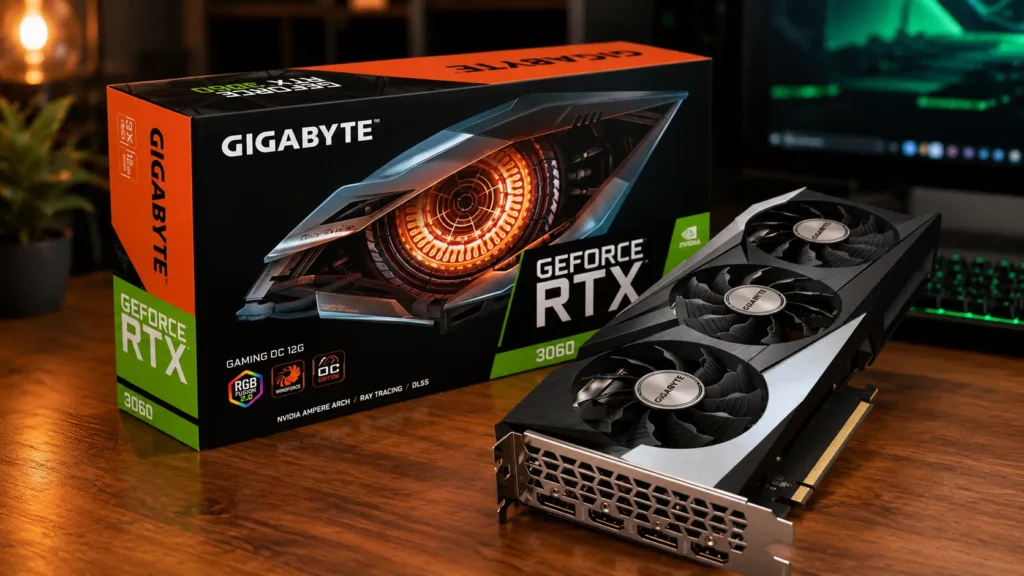
RTX 3060 12GB — One of the Best Aging GPUs
NVIDIA GeForce RTX 3060 continues to age surprisingly well.
And honestly, this GPU perfectly demonstrates why VRAM matters.
If you already own an RTX 3060 and want to get more performance, you may also find my guide on the best RTX 3060 overclock settings helpful.
When the RTX 3060 launched, many people focused mostly on raw FPS comparisons.
But years later, the 12GB VRAM buffer often helps much more than people originally expected.
Why It Still Makes Sense in 2026
The RTX 3060 still offers:
- good DLSS support;
- decent ray tracing;
- strong 1080p performance;
- stable drivers;
- and excellent used market pricing.
But the real advantage is definitely VRAM.
In modern games, that additional memory can genuinely improve long-term comfort.
Especially if:
- you play newer AAA titles;
- care about texture quality;
- or want more future-proof hardware.
Honestly, depending on pricing, I still think the RTX 3060 can make more sense than some newer 8GB GPUs.
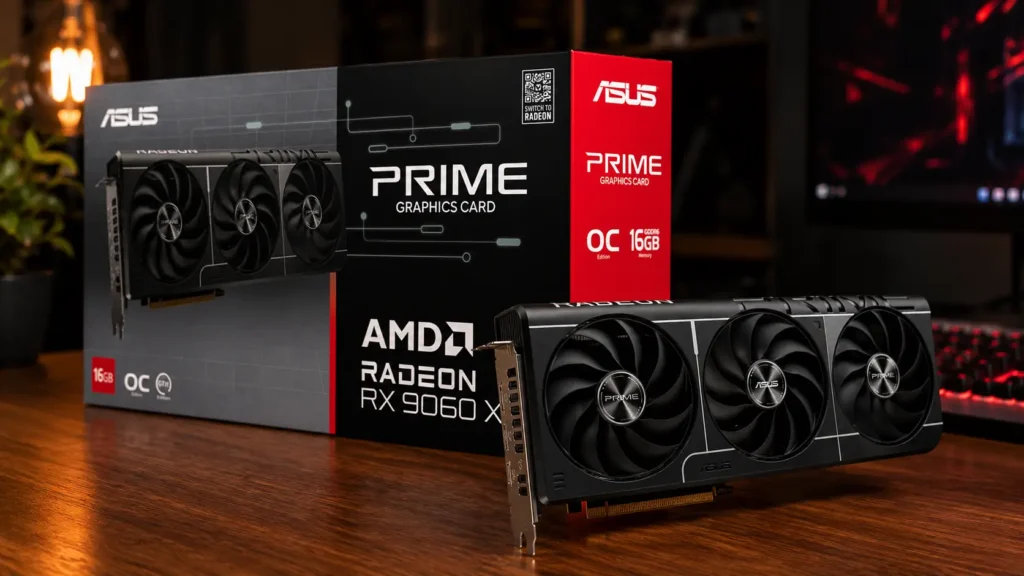
RX 9060 XT — AMD’s Most Interesting Budget GPU Right Now
AMD Radeon RX 9060 XT is one of AMD’s most interesting mainstream GPUs in 2026.
AMD continues focusing heavily on:
- strong rasterization performance;
- aggressive pricing;
- and good FPS-per-dollar value.
And honestly, AMD’s software ecosystem improved significantly over the last few years.
FSR 4 Is a Big Step Forward
One of the most important improvements is definitely FSR 4.
Compared to older FSR versions like FSR 3.1, FSR 4 looks significantly better in many games.
And honestly, in some situations, it already looks surprisingly close to DLSS.
This is a huge improvement for AMD users.
Because for a long time, DLSS clearly had the image quality advantage.
Now the gap is much smaller in many supported games.
That does not automatically mean FSR 4 is always better.
But AMD clearly made major progress here.
Where AMD Still Performs Extremely Well
For traditional rasterized gaming, AMD GPUs remain very competitive.
Especially for:
- esports gaming;
- high refresh rate 1080p;
- and gamers focused mostly on raw FPS.
And honestly, AMD GPUs often age very well because of stronger VRAM configurations and aggressive pricing.
RX 7600 — Strong Raw Gaming Performance
AMD Radeon RX 7600 remains one of the strongest value GPUs for traditional 1080p gaming.
This GPU performs especially well in:
- esports titles;
- optimized DirectX 12 games;
- and high refresh rate gaming.
AMD pricing also often makes these GPUs very attractive for budget builds.
RX 6600 — Still One of the Best Budget GPUs
AMD Radeon RX 6600 is honestly one of the best value GPUs still available for budget gaming.
Even years later, it remains extremely relevant.
Why It Is Still So Popular
The RX 6600 offers:
- excellent efficiency;
- low temperatures;
- affordable pricing;
- and surprisingly strong gaming performance.
For many gamers, it is simply “good enough.”
And honestly, that matters more than many enthusiasts realize.
Not everyone needs ultra settings or ray tracing.
A smooth 1080p experience is still perfectly enjoyable for most players.
RX 6700 XT — One of the Best Used GPUs You Can Buy
AMD Radeon RX 6700 XT is honestly one of the most interesting GPUs on the used market right now.
If you can find one in good condition, it still offers excellent value.
And the biggest reason is simple:
12GB VRAM
This GPU continues aging extremely well in modern games.
For many titles, it can comfortably handle:
- high settings;
- 1080p;
- and even some 1440p gaming.
Why Many Gamers Still Prefer It
Compared to many newer budget GPUs:
- it has more VRAM;
- stronger raster performance;
- and often very competitive used pricing.
Honestly, if someone mainly plays traditional rasterized games and finds a good local deal, the RX 6700 XT still makes a lot of sense in 2026.
RTX 3070 — Still Fast, But VRAM Became a Problem
NVIDIA GeForce RTX 3070 is still a genuinely powerful GPU.
Even today, it can deliver excellent gaming performance.
However, over time, one problem became increasingly noticeable:
8GB VRAM
And honestly, this is frustrating because the raw GPU itself is still very capable.
In some newer games, the RTX 3070 can run into VRAM limitations before raw GPU power becomes the issue.
This is exactly why many gamers now prefer:
- RTX 3060 12GB;
- or RX 6700 XT
for long-term gaming.
Still, if you mainly play:
- esports titles;
- optimized games;
- or older AAA games,
the RTX 3070 remains excellent.
Intel Arc GPUs — Surprisingly Better Than Expected
Intel Arc GPUs had a rough launch period.
Driver issues and inconsistent compatibility hurt their reputation early on.
But honestly, Intel improved things significantly.
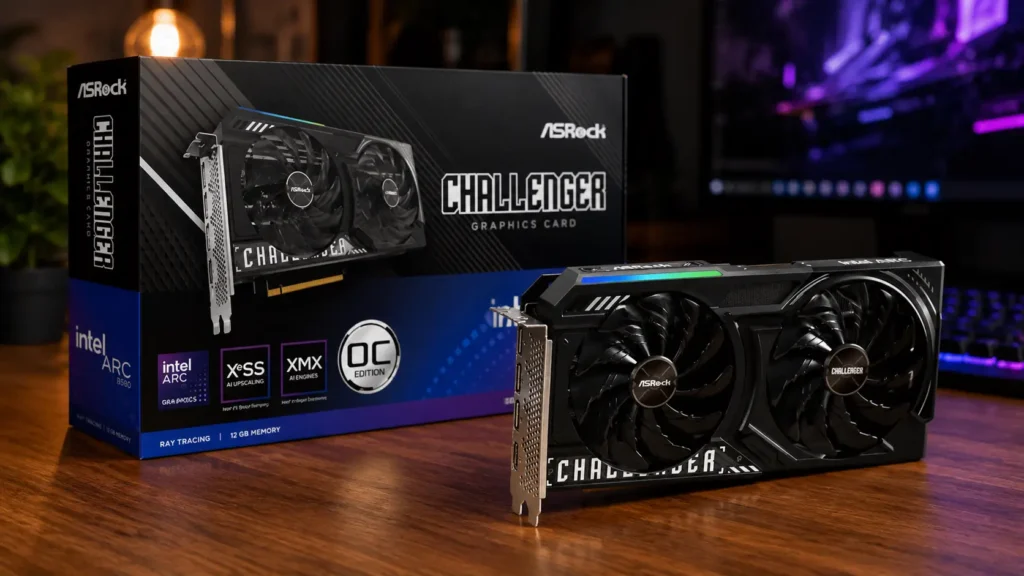
Newer Arc GPUs like:
Intel Arc B580
are much more usable today than many people expected.
Should You Consider Intel Arc?
Honestly:
yes — but carefully.
Intel Arc GPUs can offer:
- good AV1 encoding;
- competitive pricing;
- decent VRAM configurations;
- and surprisingly solid performance in modern APIs.
However, they can still be less predictable than NVIDIA or AMD in older games.
For enthusiasts willing to experiment a bit, Intel Arc is becoming increasingly interesting.
Should You Buy Used GPUs in 2026?
Honestly, for many gamers:
yes.
The used GPU market is still one of the best ways to save money.
And some older GPUs continue offering excellent value.
Why Older GPUs Still Matter
Many older GPUs are still perfectly capable of:
- 1080p gaming;
- esports titles;
- and modern AAA games with optimized settings.
Especially cards like:
- RTX 3060;
- RX 6700 XT;
- RTX 3070;
- RX 6600 XT;
- RTX 2080;
- and RTX 2070 Super.
Sometimes these used GPUs genuinely provide better value than newer entry-level cards.
What You Should Check Before Buying Used
Buying used hardware always carries some risk.
If possible, always check:
- temperatures;
- fan noise;
- visible damage;
- artifacting;
- and gaming stability.
It is also important to remember that some older GPUs were heavily used for mining.
This does not automatically make them bad.
But:
- worn fans;
- aging thermal paste;
- and long-term heat exposure
can absolutely affect reliability.
What Would I Personally Buy?
Honestly, it depends heavily on local pricing.
But generally:
Best New NVIDIA Option
- RTX 5060
Best Efficient GPU
- RTX 4060
Best Long-Term VRAM Option
- RTX 3060 12GB
Best Used GPU Value
- RX 6700 XT
Best Ultra Budget GPU
- RX 6600
Most Interesting Experimental GPU
- Intel Arc B580
Final Thoughts
1080p gaming is still one of the smartest and most balanced ways to enjoy PC gaming without spending ridiculous amounts of money.
And honestly, modern budget GPUs are much more capable than many people think.
Especially when paired with:
- DLSS;
- FSR;
- optimized settings;
- and realistic expectations.
One thing I also noticed after testing many systems over the years is that chasing ultra settings is often unnecessary.
Sometimes medium or optimized settings can provide:
- dramatically smoother gameplay;
- lower temperatures;
- lower noise;
- and a much better overall experience.
And honestly, this is exactly why some older GPUs still remain surprisingly relevant in 2026.
Because even if they are no longer top-tier hardware, many of them still deliver excellent real-world gaming performance at 1080p.
The most important thing is simply choosing the GPU that matches:
- your budget;
- your games;
- your power supply;
- and your expectations.
Because at the end of the day, smooth gameplay matters much more than marketing numbers.