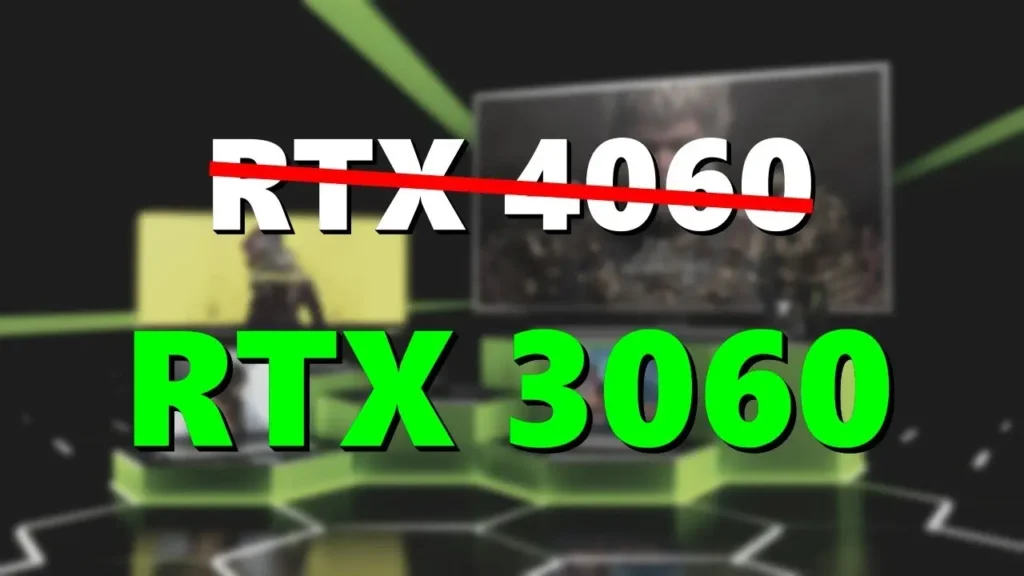
The RTX 3060 and RTX 4060 remain two of the most discussed GPUs for long-term gaming and VRAM-heavy modern titles.
Quick Answer:
The RTX 4060 is generally faster and more power efficient for modern 1080p gaming, but the RTX 3060 offers 12GB of VRAM, which may help it age better in newer VRAM-heavy games.
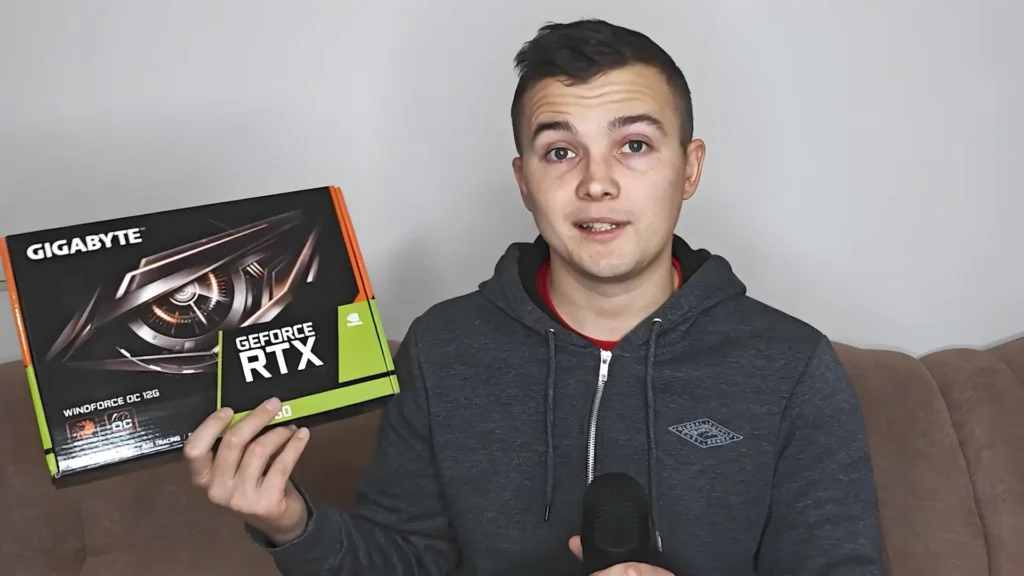
The RTX 3060 and RTX 4060 are two of the most popular NVIDIA graphics cards for budget and mid-range gaming PCs. While the RTX 4060 is newer and more efficient, the RTX 3060 still remains surprisingly relevant because of one major advantage: 12GB of VRAM.
At first glance, the RTX 4060 looks like the obvious winner. It offers newer architecture, lower power consumption, and support for NVIDIA Frame Generation. However, modern games are becoming more demanding, especially when it comes to VRAM usage.
Because of this, many gamers are starting to question whether the RTX 4060’s 8GB of VRAM will age well in the future.
So which GPU actually makes more sense for long-term gaming? Let’s break it down.
RTX 3060 vs RTX 4060: Main Differences
| Feature | RTX 3060 | RTX 4060 |
|---|---|---|
| Architecture | NVIDIA Ampere | NVIDIA Ada Lovelace |
| VRAM | 12GB GDDR6 | 8GB GDDR6 |
| Memory Bus | 192-bit | 128-bit |
| NVIDIA Frame Generation | No | Yes |
| DLSS Super Resolution | Yes | Yes |
| Power Consumption | Higher | Lower |
| Best Use Case | VRAM-heavy gaming | Efficient 1080p gaming |
The biggest difference between these GPUs is clearly the VRAM configuration.
The RTX 3060 comes with 12GB of VRAM and a wider memory bus, while the RTX 4060 focuses more on efficiency and newer NVIDIA technologies.
Why VRAM Matters for the RTX 3060 and RTX 4060
Modern games use significantly more VRAM than older titles. High-resolution textures, ray tracing, larger open worlds, and advanced rendering techniques all increase memory usage.
This becomes especially noticeable when using:
- ultra texture settings
- ray tracing
- 1440p resolution
- frame generation technologies
- modern AAA games
An 8GB GPU is still perfectly usable for many games, especially at 1080p. However, in some newer titles, VRAM limitations are already becoming visible.
When a GPU runs out of VRAM, the problem is not always average FPS. Instead, you may notice:
- stuttering
- unstable frame times
- texture loading issues
- lower minimum FPS
- inconsistent gameplay smoothness
From my experience, VRAM limitations are becoming more noticeable in newer games, especially when using high textures or frame generation technologies.
This is where the RTX 3060 can still feel surprisingly strong despite being older hardware.
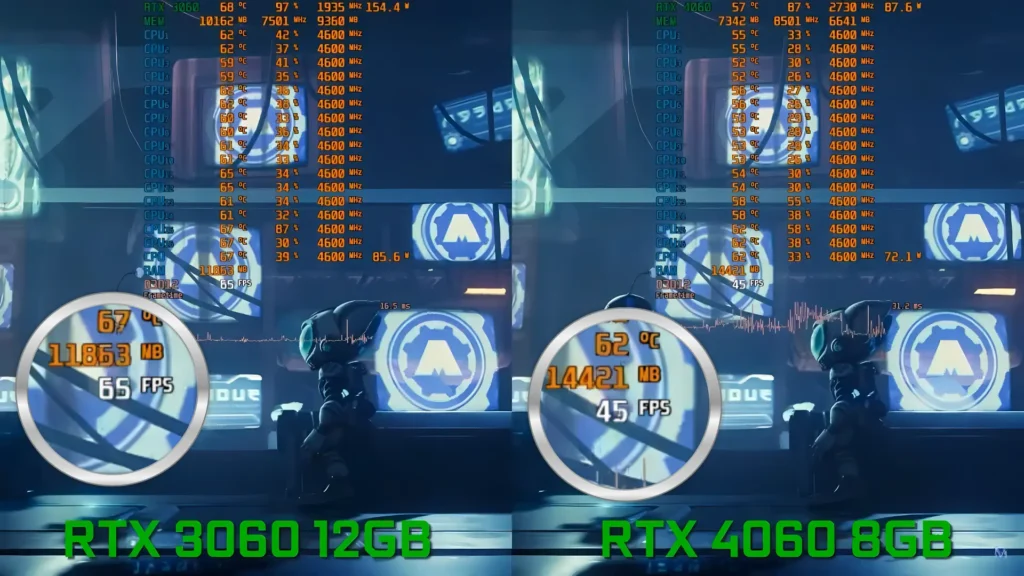
RTX 3060 performance and VRAM usage in Ratchet & Clank: Rift Apart.Is the RTX 4060 Faster Than the RTX 3060?
In standard 1080p gaming, the RTX 4060 is usually faster than the RTX 3060.
It benefits from:
- newer Ada Lovelace architecture
- improved efficiency
- better power consumption
- NVIDIA Frame Generation support
For esports games and optimized AAA titles, the RTX 4060 is a very solid GPU.
However, raw FPS numbers do not always tell the full story.
In games with heavy VRAM usage, the RTX 3060 can sometimes deliver a smoother experience because of its 12GB memory buffer.
This does not mean the RTX 3060 is universally faster. The RTX 4060 still performs better in many situations. But VRAM-heavy games can reduce the advantage of the RTX 4060 much faster than many people expected.
DLSS, Frame Generation, and FSR
Both GPUs support NVIDIA DLSS Super Resolution, so image upscaling is available on both cards.
However, the RTX 4060 supports NVIDIA Frame Generation, while the RTX 3060 does not.
This is one of the biggest advantages of the RTX 4060.
Frame Generation can significantly improve perceived smoothness and increase displayed FPS in supported games. For some users, this alone makes the RTX 4060 more attractive.
At the same time, the RTX 3060 is not completely left behind. Some games support AMD FSR upscaling and FSR Frame Generation, which can also improve performance.
DLSS and FSR are different technologies, but both aim to improve performance through image upscaling and frame generation techniques.
The latest versions of FSR have improved significantly compared to older releases, especially in terms of image quality and motion clarity.
The Problem With 8GB VRAM
Frame Generation is useful, but it is not magic.
It can improve smoothness, but it can also increase VRAM usage. This matters because the RTX 4060 has only 8GB of VRAM.
In lighter games this is usually not a problem. But in demanding modern games with:
- high textures
- ray tracing
- larger environments
- 1440p resolution
8GB can become more restrictive.
This creates an interesting situation:
- the RTX 4060 has better modern features,
- but the RTX 3060 has significantly more VRAM.
That is why the RTX 4060 is not automatically the better long-term card in every scenario.
RTX 3060 Pros and Cons
Pros
- 12GB of VRAM
- Better memory headroom for future games
- Can perform better in VRAM-heavy scenarios
- Often available at lower prices
- Wider 192-bit memory bus
Cons
- Older architecture
- Higher power consumption
- No NVIDIA Frame Generation support
- Less efficient overall
RTX 4060 Pros and Cons
Pros
- Better power efficiency
- NVIDIA Frame Generation support
- Lower temperatures and power draw
- Strong 1080p gaming performance
- Newer architecture
Cons
- Only 8GB of VRAM
- Narrower 128-bit memory bus
- May become limited in future VRAM-heavy games
We Have Seen Similar Situations Before
GPU history has already shown how important VRAM can become over time.
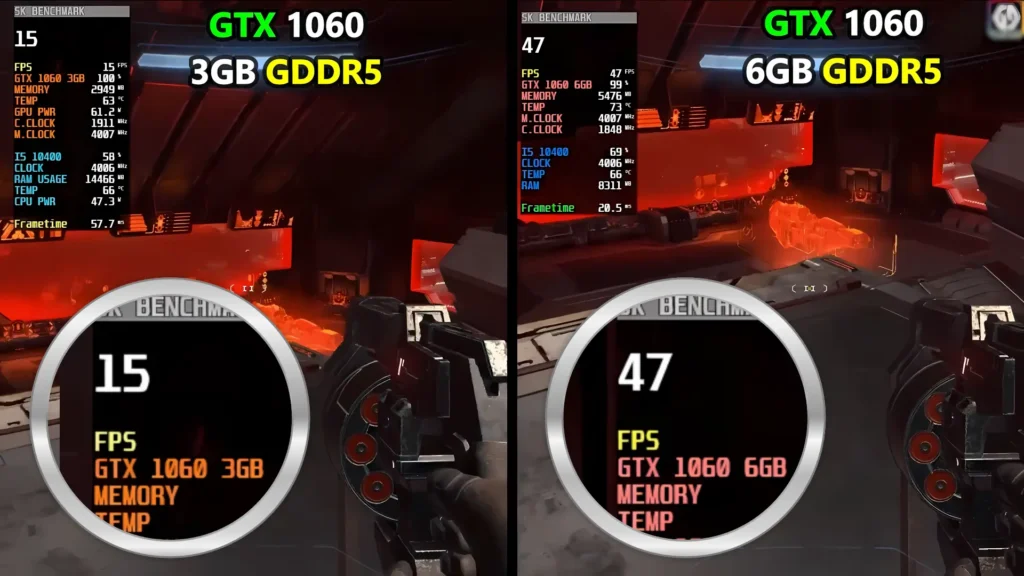
A good example is the GTX 1060 3GB vs GTX 1060 6GB situation. At launch, both cards looked relatively close in many games. But as newer games became more demanding, the 3GB version aged much worse.
The same happened with GPUs like the RX 580 8GB, which stayed relevant for surprisingly long, thanks to its larger VRAM capacity.
This does not guarantee that the RTX 3060 will always outperform the RTX 4060 in the future. However, it clearly shows that VRAM can heavily affect how well a graphics card ages.
Which GPU Makes More Sense Long-Term?
The answer depends on what you care about most.
If you mainly play esports games or optimized 1080p titles and want:
- lower power consumption,
- newer NVIDIA features,
- better efficiency,
- and Frame Generation,
then the RTX 4060 is probably the better choice.
But if you care more about:
- VRAM capacity,
- future game requirements,
- higher texture settings,
- and long-term memory headroom,
the RTX 3060 still makes a lot of sense.
Personally, I think the RTX 3060 may age better in VRAM-heavy games, while the RTX 4060 is currently the cleaner and more efficient option for standard 1080p gaming.
Final Thoughts
The RTX 3060 vs RTX 4060 comparison is much more complicated than simply comparing FPS numbers.
The RTX 4060 is newer, more efficient, and supports NVIDIA Frame Generation. For many gamers, especially those focused on 1080p gaming, it is a very good graphics card.
At the same time, the RTX 3060 still has one major advantage that should not be ignored: 12GB of VRAM.
As modern games continue increasing VRAM usage, memory capacity is becoming more important than many people expected. Because of this, the RTX 3060 still remains a very interesting option for gamers who care about long-term usability.
The best choice ultimately depends on pricing, the types of games you play, and whether you prioritize modern features or additional VRAM headroom.
Watch the Video Version
If you prefer video content, you can also watch my full comparison on YouTube, where I discuss VRAM usage, frame generation, and long-term GPU value in more detail.
FAQ
Is the RTX 3060 still good for gaming?
Yes. The RTX 3060 is still a strong GPU for 1080p gaming and can also handle many games at 1440p, depending on settings.
Is 12GB VRAM better than 8GB VRAM?
For long-term gaming, 12GB provides more memory headroom and can help in newer VRAM-heavy games.
Does the RTX 3060 support DLSS?
Yes. The RTX 3060 supports DLSS Super Resolution, but it does not support NVIDIA Frame Generation.
Does the RTX 4060 support Frame Generation?
Yes. NVIDIA Frame Generation is one of the main advantages of the RTX 4060.
Is the RTX 4060 bad because it has 8GB VRAM?
No. The RTX 4060 is still a very good 1080p GPU, but some modern games may eventually become more demanding than 8GB VRAM allows.
Which GPU will age better?
The RTX 3060 may age better in VRAM-heavy games because of its 12GB memory capacity, while the RTX 4060 benefits from newer NVIDIA technologies and better efficiency.